Compliance

Compliance/ Regulations

Working in a collision repair environment means you’re routinely exposing your team and your facility to flammable vapors/deposits and combustible dusts. Regulatory bodies like OSHA, NFPA and NEC classify these areas as Class 1, Division 1 (C1D1) – locations where ignitable concentrations of gases and vapors exist during normal operation. Selecting equipment that is properly certified for these conditions isn’t just a bureaucratic exercise – it protects your people, keeps you compliant, and preserves your business.

Global certification systems can be confusing. North America uses the Class/Division system, while Europe and many other regions follow the ATEX/IECEx zone categories. In the ATEX system, Category 3 equipment (Zone 2) offers only basic protection in areas where an explosive atmosphere is unlikely. Category 1 equipment is designed for continuous exposure (Zone 0), and Category 2 sits in between. Class 1 / Division 1, however, is far more stringent – it applies to areas where flammable vapors are present during normal operations and requires explosion‑proof or intrinsically safe equipment.

Working in a collision repair environment means you’re routinely exposing your team and your facility to flammable vapors/deposits and combustible dusts. Regulatory bodies like OSHA, NFPA and NEC classify these areas as Class 1, Division 1 (C1D1) – locations where ignitable concentrations of gases and vapors exist during normal operation. Selecting equipment that is properly certified for these conditions isn’t just a bureaucratic exercise – it protects your people, keeps you compliant, and preserves your business.

Global certification systems can be confusing. North America uses the Class/Division system, while Europe and many other regions follow the ATEX/IECEx zone categories. In the ATEX system, Category 3 equipment (Zone 2) offers only basic protection in areas where an explosive atmosphere is unlikely. Category 1 equipment is designed for continuous exposure (Zone 0), and Category 2 sits in between. Class 1 / Division 1, however, is far more stringent – it applies to areas where flammable vapors are present during normal operations and requires explosion‑proof or intrinsically safe equipment.

Why Class 1 / Division 1 Matters

Paint booths are C1D1 environments. They continuously contain flammable solvents and vapors; a stray spark or high‑voltage discharge could lead to catastrophe. Using equipment rated ATEX Category 3 (Zone 2) in these booths is dangerous because Category 3 devices are not explosion‑proof and are only meant for areas where explosive atmospheres are infrequent due to fault or an anomaly. Cheap, uncertified anti‑static guns may work in theory but they can’t handle a C1D1 booth – they can generate sparks, be far less effective and often come with warnings against use in flammable environments. The consequences of using non‑compliant equipment include:

The bottom line is simple: spray booths require C1D1‑certified equipment. Equipment rated only to ATEX Category 3 or Category 2 cannot legally be used in a Class 1 Division 1 environment. That’s why we invest heavily in certifications that competitors routinely skip.

Statgun Certifications

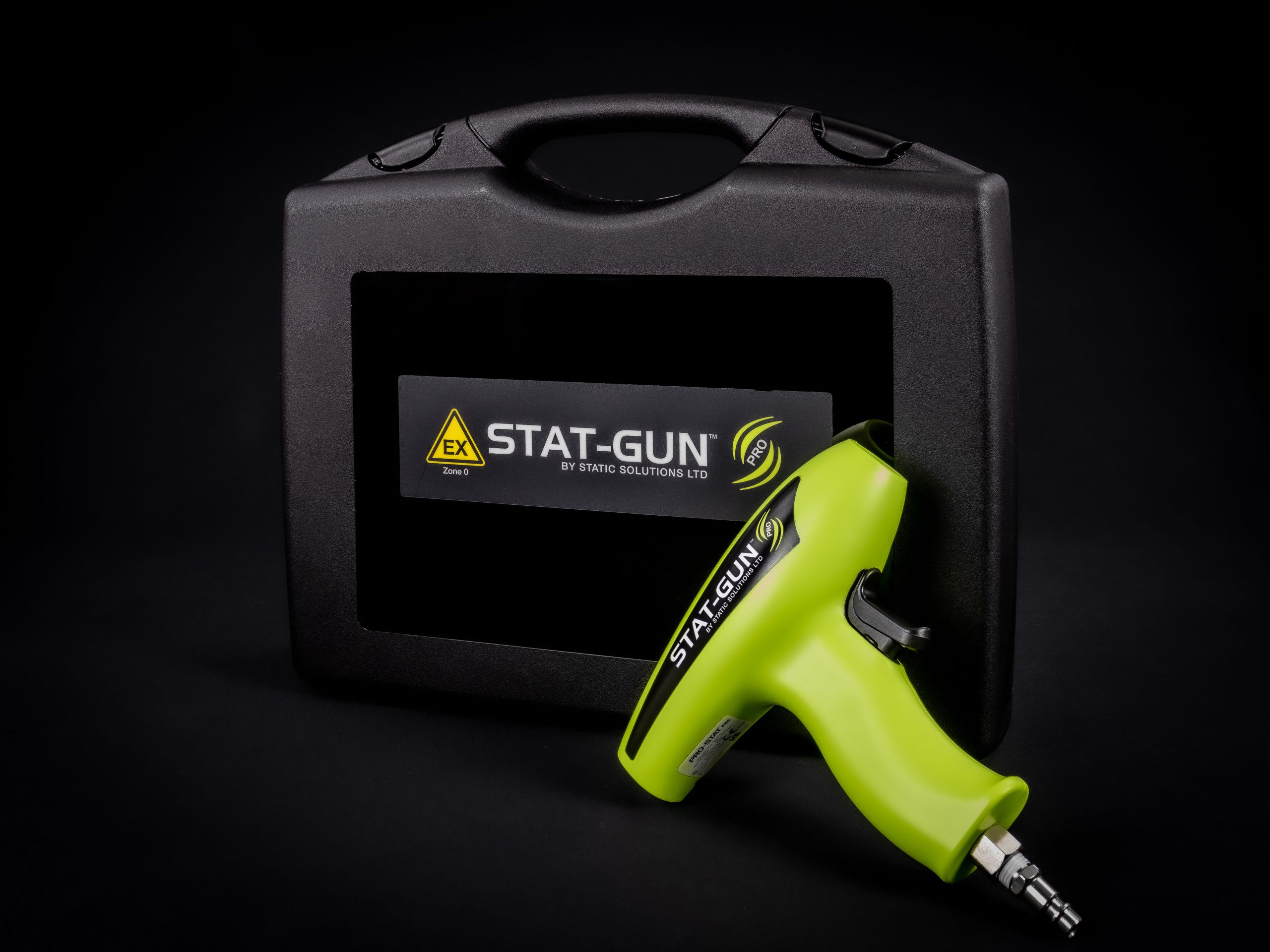
Stat-Gun is engineered specifically for hazardous spray booths. It is the only static control device of it’s kind to hold a full Class 1 / Division 1 certification, meaning it meets the most demanding standards for explosive environments. Our certifications include: